







menuMENU

What does it take for a prospect to trust you?

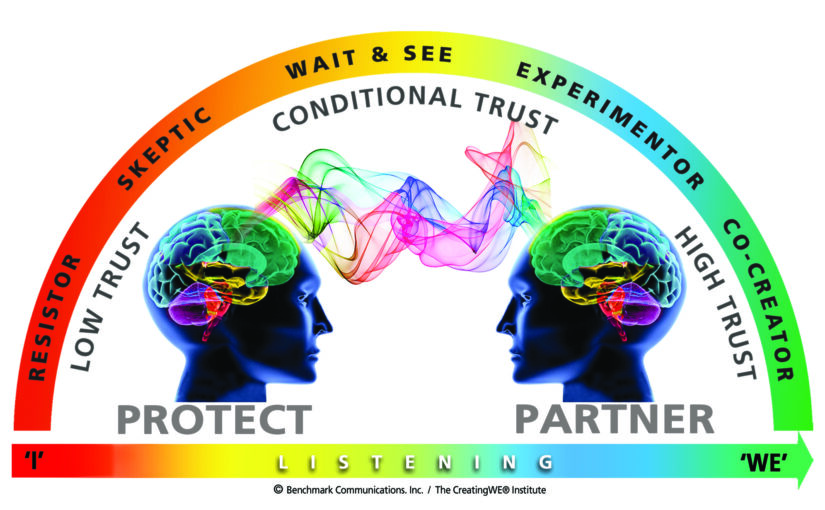
As a Certified Conversational Intelligence Coach, the image of trust says it all. When prospects first meet a salesperson, they are often in self-protect mode. We have all been exposed to a wholly self-centric and opportunistic salesperson. How did we react?

Those days of old-school selling techniques are over. It is time for salespeople to get a grip. According to my coach, Sameer Dua, for any relationship to get off on solid footing, we need:

1) Shared Interest – You are interested in having a conversation, finding out if they are a qualified prospect, providing your solution, and closing the sale. What is the prospect’s level of interest in what you are selling?

2) Shared Care – You care! Do they care about solving their problem, exploring possibilities, and partnering with you?

3) Shared Commitment – If the prospect does not commit to the next step in your sales process, you have not developed trust, or there are other reasons you have no control over. The point is that without Shared Commitment, there is no relationship.

4) Shared Possibility – When you have developed Conditional Trust with your prospect and are willing to explore possibilities, you can be assured that they feel the trust and relationship building is moving forward.

5) Shared Action – Isn’t this where we want to be with our prospects? They willingly take action on what is important to them and experience you as the catalyst in making that happen. They see you as a partner, and you have developed trust.

You put the bow on the present.

Developing a relationship with prospects is the hardest thing we do as salespeople. Ultimately, relationship failure comes down to poor communication and low levels of trust. Salespeople mistakenly believe that their job is to give prospects answers. We believe that listening is simply ‘waiting to speak.’ When salespeople talk and talk and talk, the prospect is probably asking themselves, ‘how the hell can I get out of this?’ or what they are going to have for dinner.

Communication is about transmitting and receiving information. In the first conversation, the salesperson should speak no more than 30% of the time. Yes, the prospect should be talking 70% of the conversation.

The only way to develop trust with a prospect is to get better at receiving information. Please don’t go and enroll in an active listening course. The fundamental transformation will only emerge when you do personal inner development work and realize that sales relationships are not all about you. It is about “we” partnering with authenticity, sincerity, and presence.

Developing trust with prospects is also about understanding the polarity between confidence and humility. Relationships require a self-assured presence, competent and comfortable sharing thoughts and ideas, and approachable, open, respectful, and willing to learn from your prospects. Be curious about what the prospect is thinking and how they think.

The early warning signs that you are blowing trust-building are when you become arrogant – thinking you know what is best for the prospect. (Maybe your solution is perfect, however, when it comes out of your mouth, they will doubt it, when it comes out of THEIR mouth, it’s true.) Role-playing conversations allow the sales conversation to unfold beautifully organically.

Other early warning signs are when you are talking for longer than 20-40 seconds at a time, when you start pushing your agenda instead of finding out what the prospect needs when you get impatient and start judging and condemning them in your mind. How will you help them and partner with them if you judge them? They will feel your judgment and distrust your solution. They may give you a counterfeit ‘yes,’ schedule another appointment with you and either be a no show or call to cancel with a lame excuse. This always happens, and it is on you, the salesperson. Is it time to own up to what keeps you from closing more sales?

By the way, I have blown many trust-building conversations. That is why I am so intrigued by this topic. I am a work in progress. If you are serious about personal and professional development so you can learn how to authentically and ethically build trust, please feel free to contact me for info on 1:1 coaching.
As a Certified Conversational Intelligence Coach, the image of trust says it all. When prospects first meet a salesperson, they are often in self-protect mode. We have all been exposed to a wholly self-centric and opportunistic salesperson. How did we react?

Those days of old-school selling techniques are over. It is time for salespeople to get a grip. According to my coach, Sameer Dua, for any relationship to get off on solid footing, we need:

1) Shared Interest – You are interested in having a conversation, finding out if they are a qualified prospect, providing your solution, and closing the sale. What is the prospect’s level of interest in what you are selling?

2) Shared Care – You care! Do they care about solving their problem, exploring possibilities, and partnering with you?

3) Shared Commitment – If the prospect does not commit to the next step in your sales process, you have not developed trust, or there are other reasons you have no control over. The point is that without Shared Commitment, there is no relationship.

4) Shared Possibility – When you have developed Conditional Trust with your prospect and are willing to explore possibilities, you can be assured that they feel the trust and relationship building is moving forward.

5) Shared Action – Isn’t this where we want to be with our prospects? They willingly take action on what is important to them and experience you as the catalyst in making that happen. They see you as a partner, and you have developed trust.

You put the bow on the present.

Developing a relationship with prospects is the hardest thing we do as salespeople. Ultimately, relationship failure comes down to poor communication and low levels of trust. Salespeople mistakenly believe that their job is to give prospects answers. We believe that listening is simply ‘waiting to speak.’ When salespeople talk and talk and talk, the prospect is probably asking themselves, ‘how the hell can I get out of this?’ or what they are going to have for dinner.

Communication is about transmitting and receiving information. In the first conversation, the salesperson should speak no more than 30% of the time. Yes, the prospect should be talking 70% of the conversation.

The only way to develop trust with a prospect is to get better at receiving information. Please don’t go and enroll in an active listening course. The fundamental transformation will only emerge when you do personal inner development work and realize that sales relationships are not all about you. It is about “we” partnering with authenticity, sincerity, and presence.

Developing trust with prospects is also about understanding the polarity between confidence and humility. Relationships require a self-assured presence, competent and comfortable sharing thoughts and ideas, and approachable, open, respectful, and willing to learn from your prospects. Be curious about what the prospect is thinking and how they think.

The early warning signs that you are blowing trust-building are when you become arrogant – thinking you know what is best for the prospect. (Maybe your solution is perfect, however, when it comes out of your mouth, they will doubt it, when it comes out of THEIR mouth, it’s true.) Role-playing conversations allow the sales conversation to unfold beautifully organically.

Other early warning signs are when you are talking for longer than 20-40 seconds at a time, when you start pushing your agenda instead of finding out what the prospect needs when you get impatient and start judging and condemning them in your mind. How will you help them and partner with them if you judge them? They will feel your judgment and distrust your solution. They may give you a counterfeit ‘yes,’ schedule another appointment with you and either be a no show or call to cancel with a lame excuse. This always happens, and it is on you, the salesperson. Is it time to own up to what keeps you from closing more sales?

By the way, I have blown many trust-building conversations. That is why I am so intrigued by this topic. I am a work in progress. If you are serious about personal and professional development so you can learn how to authentically and ethically build trust, please feel free to contact me for info on 1:1 coaching.